ELEPO21 versus NEPA21
Choosing the right electroporation system for your lab can be a difficult decision. There are several important features and parameters to consider, some of which may overlap between your choices. We invite you to discuss with us your application and find out which of our systems is best for your applications of interest. With hundreds of our own systems in the field and over a thousand peer-reviewed publications, we are certain that we can help you choose the right set-up. In most cases, we can even provide a written protocol and a set of pulsing parameters to get you started.
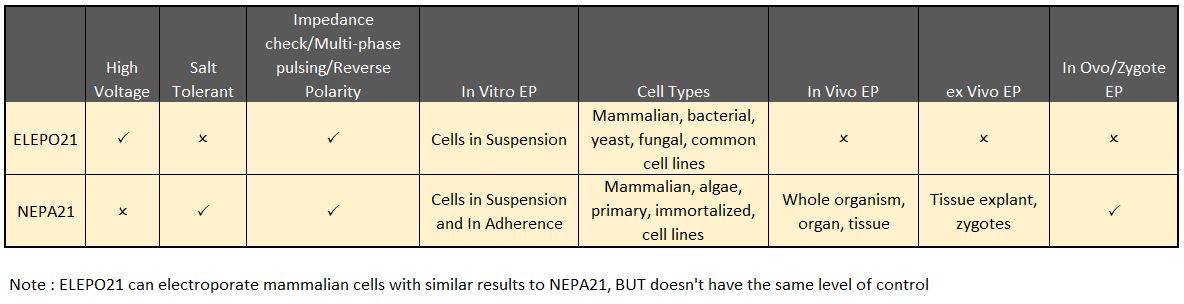
The ELEPO21 (unlike the NEPA21) delivers electric pulses from a capacitor.
What this means is that when using the exact same parameter settings:
- where impedance is LOW, more current is delivered and as a result, the pulses decays over time and its configuration is thus not square wave.
- where impedance is HIGH, less current is delivered and then as a result, the pulse does not decay over time and its configuration is square wave.
The effect of varying the LOW and HIGH impedance is illustrated in the following two videos:
- Impedance was varied by using a 50 Ohm (LOW Impedance) and a 1,000 Ohm (HIGH Impedance) cement resistor.
- All other parameter setting were standardised as follows:
- Poring Pulse: V:1000, Pulse Length:5msec, Pulse Interval:50 msec, No. of Pulses: 2, Polarity Switch: OFF
- Transfer Pulse: V:100, Pulse Length:50msec, Pulse Interval:50 msec, No. of Pulses: 5 Polarity Switch: ON
The following are screen shots of what the ELEPO21 natural voltage decay pulses look like at LOW and HIGH impedance: For the same voltage setting, one can clearly observe the different pulse decay between impedance measurements of 50Ω and 1kΩ.
|
Low Impedance 50 Ohm cement resistor |
High Impedance 1000 Ohm cement resistor |
Photo 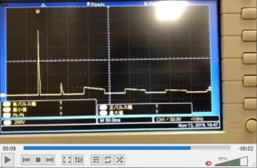 |
Photo 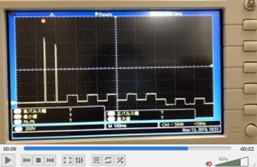 |
| Video | Video |
For Cell Electroporation, which is normally executed at LOWER impedance, this means that the ELEPO21 does not deliver a perfect square wave, unlike the NEPA21 which delivers a perfect square wave at lower impedance. However, the ELEPO21 square wave pulse configuration at lower impedance is substantially more square-wave-like than other competitor devices and delivers results similar to those of the NEPA21.
For Bacterial and Yeast Electroporation with the ELEPO21, because the electroporation is performed at HIGHER impedance, the square wave configuration of the pulse is preserved throughout the pulse delivery.
In contrast to the NEPA21, the ELEPO21 cannot be used for adherent-cell electroporation (using cell-culture electrodes) or in vivo/in utero/in ovo/ex vivo electroporation applications.
Direct comparison with NEPA21 and ELEPO21
The NEPA21 is designed for Lower Voltage/Lower Impedance applications.
- It accommodates a wider range of application:
- In Vivo
- Ex Vivo
- In Vitro (both suspension cell and adherent cell, in the well-plate, electroporation
- In Utero
- In Ovo
- Ex Ovo
The ELEPO21 has been designed specifically for (Higher Voltage/Higher Impedance applications
- It accommodates a smaller range of In Vitro applications:
- Bacteria
- Fungus
- Yeast
- Cell (ONLY suspension cell electroporation)
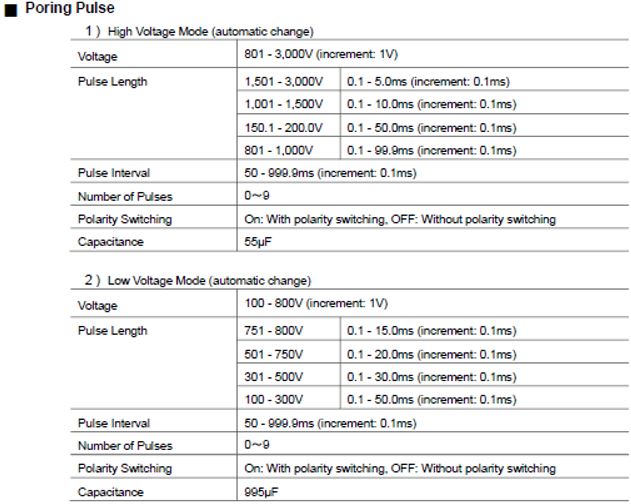
- The device has two Voltage Modes (High and Low)
- The High Voltage Mode is from 801-3,000V.
- The Low Voltage Mode is from 100-800V.
- The In Vivo electrodes available for the NEPA21 system do not fit the ELEPO21.
- User safety drives this design configuration.
- The highest ELEPO21 voltage setting (3,000V) it is too dangerous to be used for In Vivo
- For your information, all NEPA21 In Vivo protocols are under 300V, so there is no need to programme a higher Voltage range into our In Vivo electroporation offering (the NEPA21)
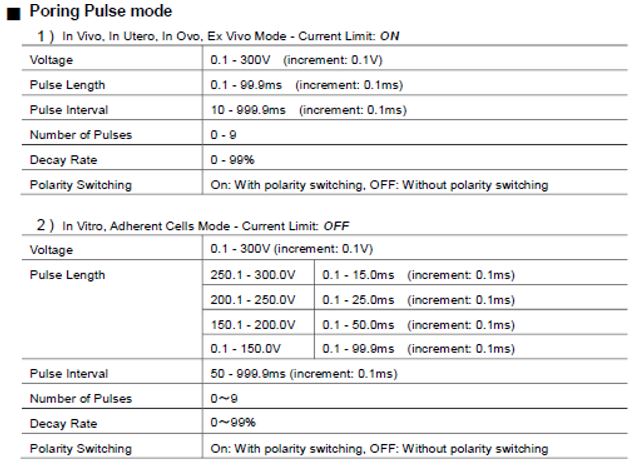
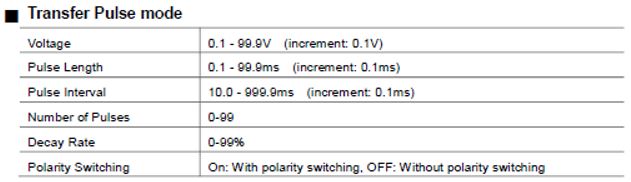
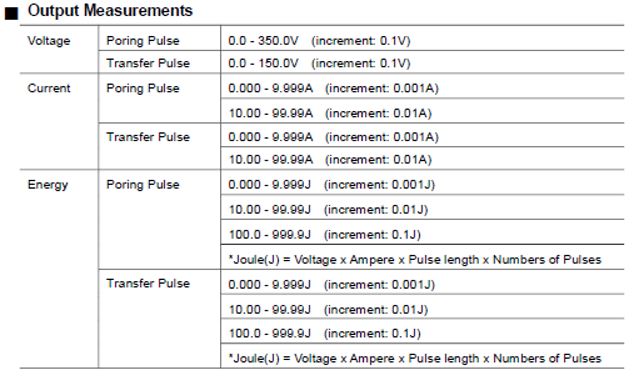
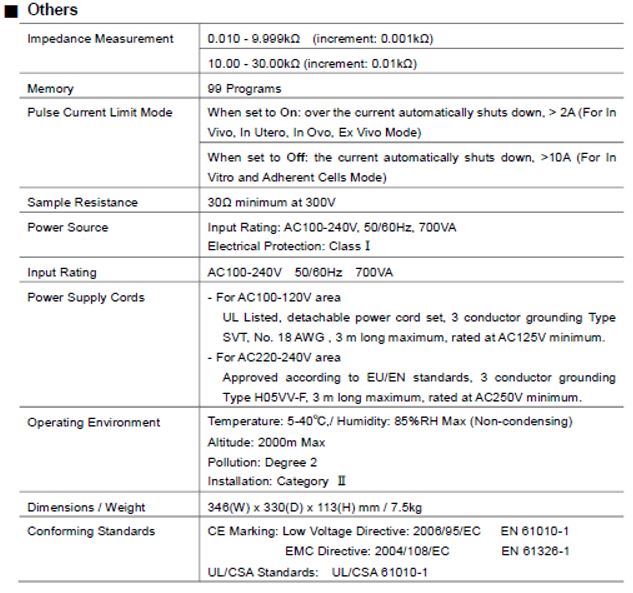
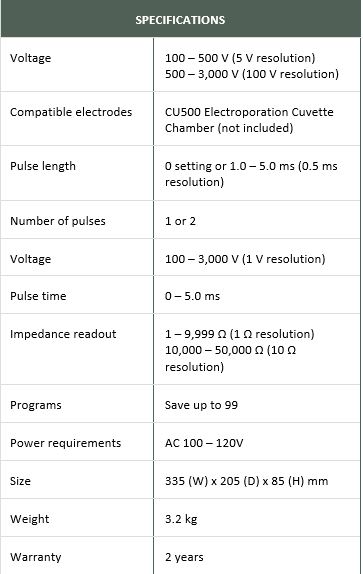
NEPA21 protocol parameters include:
| Settings | Output Measurements |
The NEPA21 can control all possible electroporation parameters (with exemplar precision)
|
|
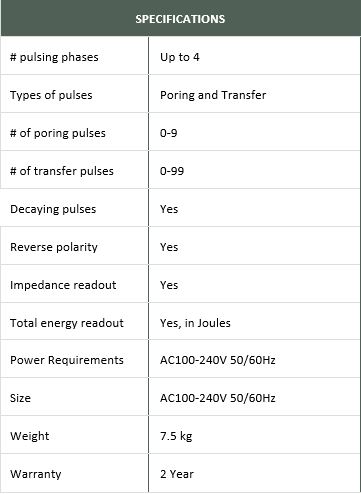 |
||
 |
||
 |
||
 |
||
 |
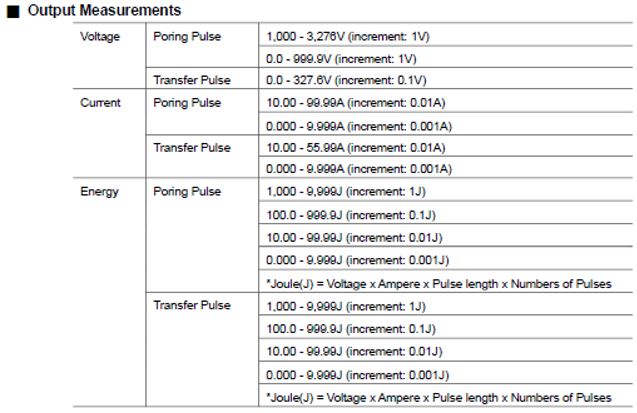
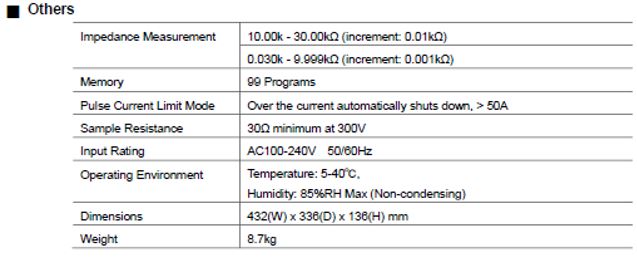
ELEPO21 protocol parameters include:
| Settings | Output Measurements |
The ELEPO21 can control all possible electroporation parameters (with exemplar precision)
|
|
 |
||
 |
||
 |
||
 |
||
 |
||
 |