
NEPA21_In-Vivo_EP-Cerebellum-Pups_between_3-8_days_old
NEPA21: In Vivo Mouse EP – Cerebellum – Pups between 3-8 days old
In Vivo Neonatal Brain (Cortex / Hypothalmus) EP
– You may use either the CUY650P7 or CUY650P10 electrode.
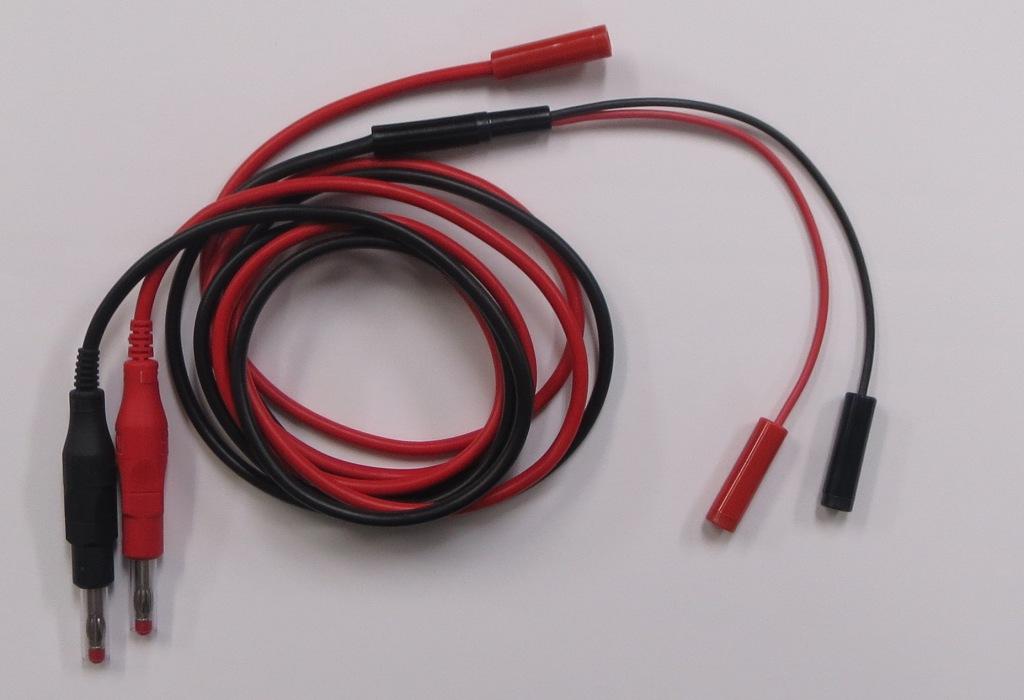
– You will also need the C118 cable. (C118 Technical Drawing and Photo of connection)
– The method is explained in the following article:
– Photo Illustration to accompany the article above.
– This method may be executed with or without the use of gauze (our preferred method is without gauze).
EP Condition sheets for both options are available to clients who have purchased the NEPA21 system.
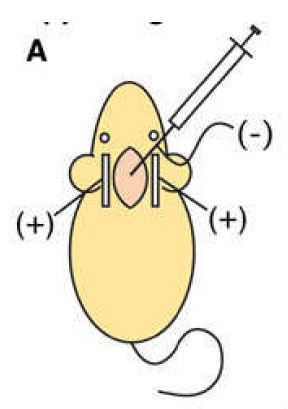
While the ‘Ueshima et al’ method in the above ‘Microtubule-based’ article demonstrates P8, we believe the method will work just as well for P10-14.
.
NEPA21: In Vivo Neonatal Mouse Brain EP – subventricular zone (SVZ) – Postnatal day 2 pups, with CUY650P10
Please note the advantages of knowing electric resistance and current as important EP Factors.
| Sample A | Setting: 100V | ==> |
Impedance: 200Ω |
==> | Output Ampere: 0.5A | The Results will |
| Sample B | Setting: 100V | ==> | Impedance: 500Ω | ==> | Output Ampere: 0.2A | not be the same |
Please note the following CUY21 publications:egory
|
Title |
Electrode |
Voltage |
P on |
P off |
No of Pulses |
|
|
Rat and Mouse (Neonatal) Brain
|
Renaud et al. Plexin-A2 and its ligand, Sema6A, control nucleus-centrosome coupling in migrating Nature Neuroscience, Volume 11, Number 4, Pages 440-449, April 2008 |
75V |
50ms |
450ms |
5 |
|
|
|
Boutin et al. Efficient In Vivo Electroporation of the Postnatal Rodent Forebrain PLoS ONE, Volume 3, Issue 4, e1883, 2 April 2008 |
100V |
50ms |
950ms |
5 |
|
|
|
Umeshima et al. Microtubule-based nuclear movement occurs independently of centrosome positioning PNAS, Volume 104, Number 41, Pages 16182-16187, October 9, 2007 |
Syringe needle
|
70V |
50ms |
150ms |
6 |
For a single output-pulse setting (CUY21 mode), we recommend that you next test 100V, 90V, 80V and 70V (5 pulses, pulse duration 50ms and pulse interval 950ms).
EP Condition Sheets for the NEPA21 4-Step multi-pulse protocol are available to NEPA21 clients
Moreover, if the NEPA21 is compared with other competing devices for in-vitro cell transfection, we again observe significantly better results with the NEPA21 system.
Please note the following link:
Neurospheres – Neural Stem Cells Derived from Mouse SVZ, 24 hrs, 48 hrs and 72 Hrs after EP
Other Relevant Links:
– Postnatal Cerebellum EP with a 3 part electrode (CUY699P7x6) or equivalent electrode combination
– Ex vivo and In Vivo (Retina)
Postnatal (P0) EP – Mouse Retina Ex Vivo EP
We recommend the CUY650P7 electrode.
Please note the following;
For Methodology, please note the publication: Efficient In Vivo Electroporation of the Postnatal Rodent
– Mouse Embryo – Retina/Eye